Kitchen tech is most valuable when it supports a routine you already repeat
The kitchen is full of products that sound impressive in isolation. Connected cooking, remote controls, app presets, guided programs, voice prompts. But kitchen tech only becomes truly useful when it strengthens a pattern you already live with: early-morning coffee, after-work preheating, batch meal prep, or checking progress without standing over the appliance every few minutes.
That is what separates helpful smart appliances from expensive novelty. If the connected layer removes a repeated point of friction, it has a reason to exist. If it mostly creates another app without improving timing, awareness, or convenience, the kitchen is not becoming smarter. It is just becoming busier.
Choose categories where remote awareness genuinely changes the experience
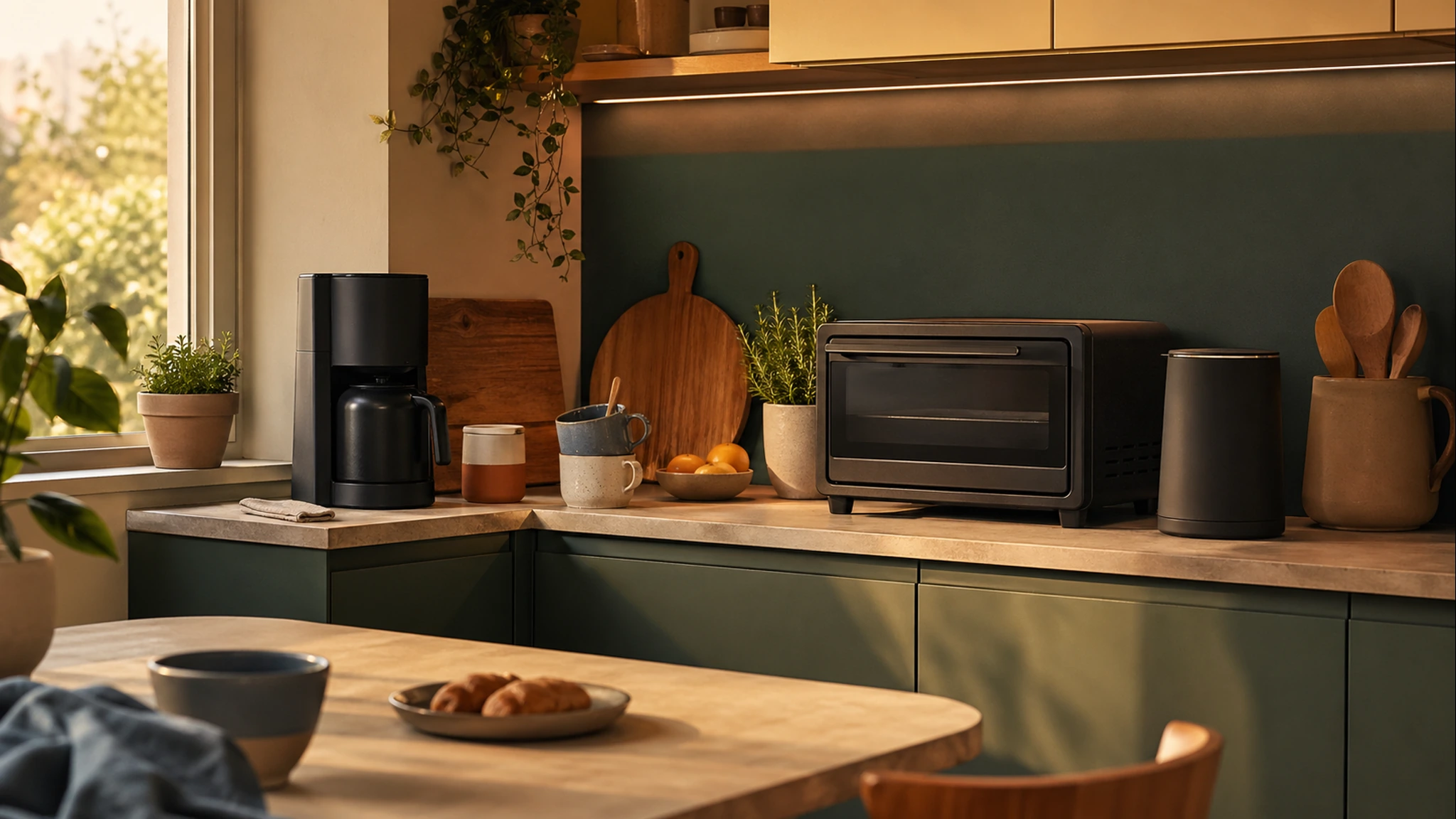
Not every appliance benefits equally from connectivity. Coffee makers, countertop ovens, and some multicookers naturally align with timing and status awareness. You care when the cycle starts, when it is preheated, or when dinner is holding steady. Those are real moments where connected features can improve a weekday.
Compare that with categories where app control does not meaningfully change behavior. If the appliance still requires you to hover nearby, load food manually in the same way, or perform most actions on-device anyway, the smart layer may not justify extra cost or complexity. The better buy is the one where connection changes how the routine actually feels.
Physical controls still matter in a good smart kitchen
Kitchen appliances are touched with wet hands, in a rush, half awake, or while juggling three other things. That makes physical controls much more important than in some other smart-home categories. A good connected appliance should still be pleasant to use from the front panel. If the only good experience lives in the app, something has gone wrong.
This is especially important in shared households. A kitchen product should not require every family member to understand the same app logic just to make coffee or reheat food. The smart layer should feel like a bonus path for timing and visibility, not a gate that stands between people and a basic appliance function.
Avoid appliances that turn cooking into another notification stream
Kitchen life already contains enough decisions. A smart appliance should reduce mental load, not multiply it. If the device sends unnecessary prompts, hides basic functions behind app menus, or encourages constant remote fiddling, it can make cooking feel more fragmented instead of more organized.
The best connected kitchen tools quietly support the background of the day. The coffee is ready when it should be. The oven is preheated before you get to it. The cooker keeps dinner moving while you do something else. That kind of calm usefulness is what the category should aim for.