Partecipiamo al Programma Amazon EU Associates. Informativa completa →

Pet Hair Guide

Robot Vacuums for Pet Hair: A 2026 Buyer's Framework

In pet homes, the best robot vacuum is usually the one that survives the boring realities: fur wrap, litter scatter, awkward thresholds, and the daily temptation to stop using it.

Maya Ellison April 23, 2026 Last updated: April 23, 2026 9 min read
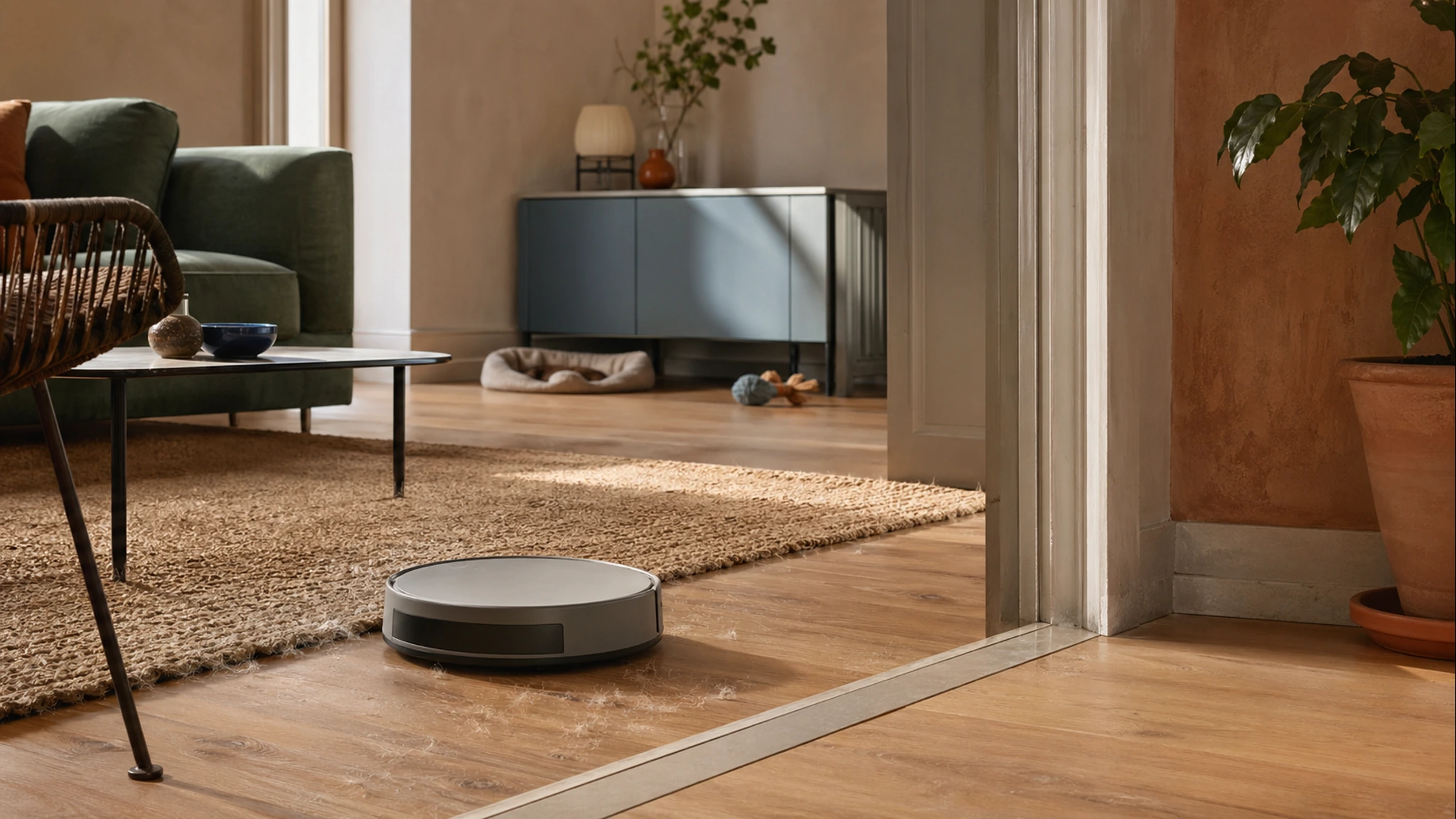
A warm living room scene with a generic robot vacuum near a rug and pet-home clutter.

Pet hair is a maintenance problem before it is a suction problem

Marketing pages love dramatic suction numbers, but pet homes usually live or die on cleanup friction. Long fur wraps around rollers, kibble and litter collect at thresholds, and fine dust settles around corners where a weak navigation pattern becomes obvious within a few days. A vacuum that looks powerful on paper can still become annoying if every third run ends with you cutting hair off the brush by hand.

That is why the first question should not be, 'Which model has the biggest headline spec?' It should be, 'Which design is least likely to become a weekly nuisance in this house?' Homes with one short-haired cat have different needs from homes with two dogs, rugs, and muddy paw traffic. The better buy is the one that keeps showing up for your actual mess profile.

Navigation, thresholds, and room flow matter more than buyers expect

Pet fur rarely stays politely in the middle of an open floor. It gathers under dining chairs, beside litter boxes, around entry mats, and along the edge where hard flooring meets rugs. A robot that gets stuck on common transitions or misses the same awkward zone every day adds frustration without meaningfully reducing manual cleaning.

If your home has multiple rugs, feeding stations, or furniture with narrow clearances, consistent movement is more valuable than a flashy app screen. A calmer, more predictable machine often creates better long-term results than one with stronger marketing but weaker room behavior. For busy homes, 'boringly dependable' is often the feature that matters most.

Self-empty docks help only when they reduce the whole chore loop

A dock can be a major upgrade in homes where bins fill up after one or two runs. That is especially true for larger layouts, multiple pets, or households that want the robot running every day. But docks are not magic. Bags need replacing, filters still need attention, and hair tangles do not disappear just because the dust bin empties itself.

The best way to think about a dock is as labor reduction, not labor elimination. If it meaningfully lowers how often you interrupt the routine, it earns its space. If you still fight with tangled rollers, awkward filter access, or constant error prompts, the premium feature has not really solved the maintenance problem you paid to avoid.

Choose for the week you live, not the ranking graphic you see

A small apartment with one shedding pet may be better served by a compact robot that runs often and stores easily. A larger family home with rugs, cat litter, and a heavy-shedding dog usually benefits more from better navigation, stronger debris handling, and less frequent emptying. Those are different households, and they should not be pushed toward the same one-size-fits-all answer.

The strongest robot vacuum is the one that makes your manual vacuum come out less often, not the one that wins the loudest spec-sheet argument. If it can keep visible fur under control, handle the annoying zones in your floor plan, and stay usable after a month of pet mess, it is doing the real job that matters.


Buyer scenarios

Category picks worth checking

Recommendation block

Self-empty robot vacuum for high-shed households

Best for: Homes with multiple pets, rugs, and bins that fill fast

Why consider it: This style makes the most sense when fur volume is high enough that constant manual emptying would otherwise break the routine.

Pros

  • Cuts down on daily bin interruptions
  • Better fit for larger homes and frequent runs
  • Usually pairs well with mapped cleaning schedules

Cons

  • Dock takes up meaningful floor space
  • Consumables and replacement parts can cost more over time

What to know: Prioritize roller access, dock reliability, and easy debris handling before paying extra for headline suction.

Browse on Amazon.it

Recommendation block

Compact pet-hair robot for apartments and smaller layouts

Best for: One-bedroom homes or low-clutter spaces with regular shedding

Why consider it: A smaller robot can be the smarter fit when storage is limited and you do not mind handling the dust bin yourself.

Pros

  • Easier to store in tight homes
  • Lower starting cost than full dock systems
  • Often enough for daily visible-fur control

Cons

  • Onboard bins fill much faster
  • Manual upkeep becomes more noticeable in heavy-shed homes

What to know: Brush design, threshold handling, and under-furniture clearance matter more here than feature overload.

Browse on Amazon.it

Recommendation block

Robot vacuum and mop combo for hard-floor pet homes

Best for: Homes with paw prints, kibble crumbs, and mixed hard-floor traffic

Why consider it: A combo model can help when you want one machine to manage both fur pickup and light everyday floor freshening.

Pros

  • Useful for kitchens, entryways, and feeding zones
  • Can reduce the need for separate light-cleaning passes
  • Better fit for homes with lots of hard flooring

Cons

  • Mopping performance varies widely by model
  • Maintenance complexity is usually higher than vacuum-only units

What to know: Treat the mop layer as a routine helper, not a substitute for real deep cleaning.

Browse on Amazon.it

Before You Buy

Reader questions answered

Do pet owners automatically need a self-empty dock?

No. It becomes most valuable when your home sheds heavily enough that manual bin emptying starts interrupting the routine every few runs.

What matters more than suction for pet hair?

Brush cleanup, floor navigation, threshold handling, and how easy the machine is to maintain usually matter more once you live with it for a few weeks.

Will a robot vacuum replace a full-size vacuum in a pet home?

Usually not entirely. It can dramatically reduce visible fur and cut down on weekly effort, but most pet households still need occasional deeper cleaning.

ME

Written by

Maya Ellison

Editorial Lead

Maya shapes buyer guides around daily routines, maintenance load, and long-term value instead of spec-sheet hype.